
But this isn't a five-year cash rent agreement. Most solar leases run 25 to 40-plus years, often with renewal options that push the timeline further. That's long enough to span a farm succession, a change in county zoning, or your grandchildren inheriting land they never expected to manage under someone else's solar array.
This article walks through the real decision: is leasing worth it once you account for site suitability, contract terms, taxes, community approval, and what happens to the land when the lease ends? We'll cover how to evaluate your property, understand the developer's process, read the economics, and know when to call in independent advice.
Key Takeaways
- Grid access and interconnection costs often matter more than raw acreage when developers screen sites
- Lease rates vary widely by region, grid capacity, and project stage — there's no single national rate
- A solid lease addresses every phase: option, construction, operations, renewal, and decommissioning
- Independent legal, tax, and agricultural review before signing protects you for decades, not years
What Is a Solar Farm Land Lease?
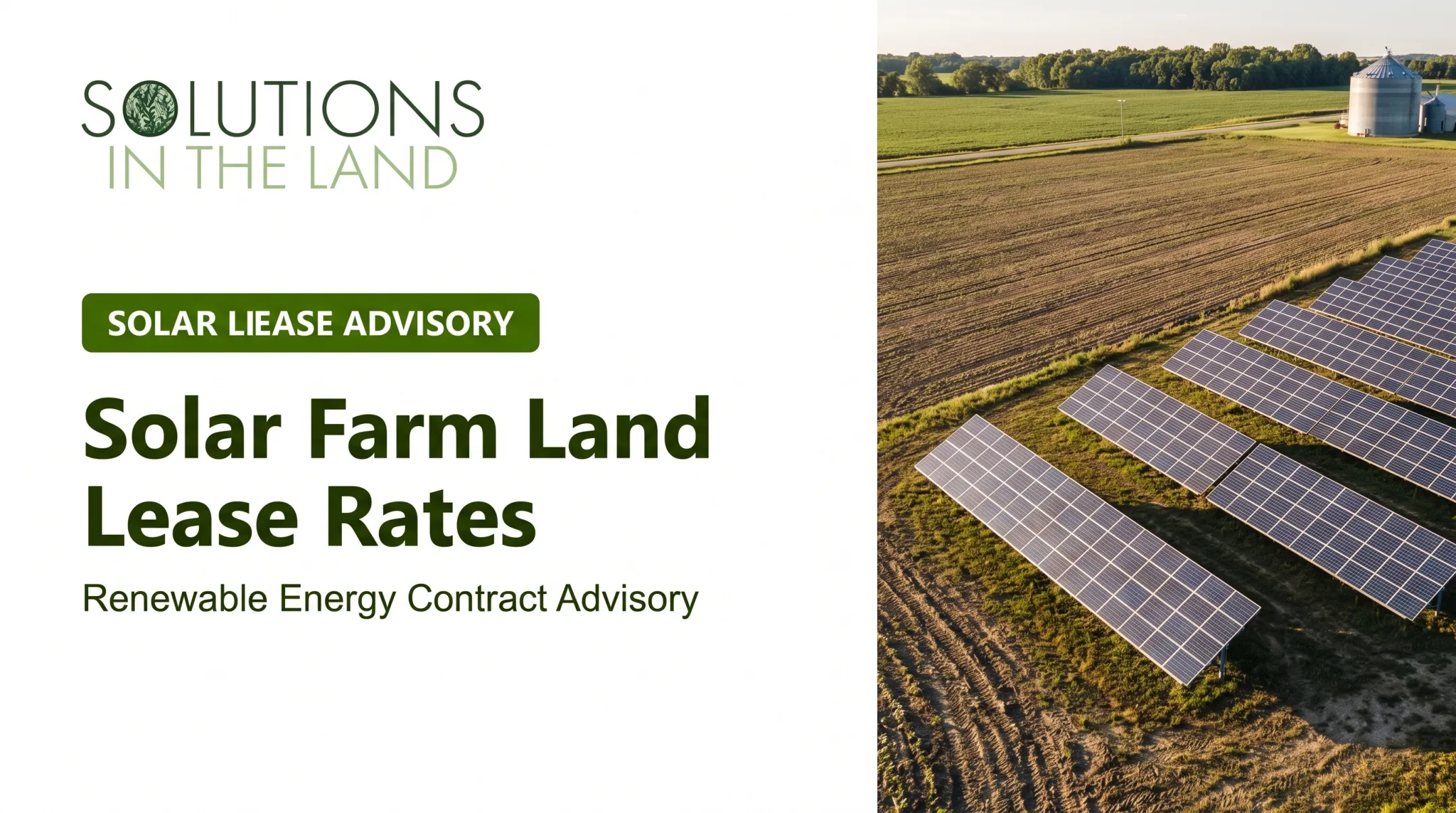
A solar farm land lease is a contract that lets a developer build and operate a photovoltaic facility on your property in exchange for payments to you. The developer owns and runs the equipment. You keep title to the land, but you give up control over how that acreage gets used for the length of the agreement.
This is not the same as an option or an easement, and the distinction matters:
- Option or development agreement: Reserves the developer's right to lease while they pursue permitting, interconnection, and financing—often locking you in before anything is guaranteed to get built.
- Easements: Cover access roads, collection lines, or a substation outside the panel footprint. These can run separately from the lease and sometimes outlast it.
- The actual lease: Kicks in once construction begins, typically after permits and power-purchase arrangements are in place.
A Long, Multi-Phase Commitment
Solar leases typically run 25 to 40-plus years, and many include renewal options that extend well beyond that.
Rent usually shifts by phase:
- Smaller option payment during permitting
- Construction-phase payment while the project is built
- Full operating rent once the facility generates power
Some agreements also build in escalation clauses tied to the Consumer Price Index or a fixed annual bump.
One thing landowners often assume incorrectly: you don't get the electricity. Unless the agreement specifically includes a revenue-share, community solar arrangement, or other negotiated benefit, you receive lease payments — not power.
Is Your Land Suitable for a Solar Farm?
Not every parcel that looks flat and sunny will pencil out for a developer. Developers underwrite far more than raw acreage before they bid.
Physical criteria developers assess:
- Usable acreage and solar exposure
- Slope, soil stability, and vegetation cover
- Wetlands, floodplain exposure, and other environmental constraints
- Road access for construction and maintenance equipment
- Ability to build without excessive grading or land disturbance
Grid Access Can Matter More Than Acreage
A gorgeous, flat 100 acres means nothing if the nearest substation can't absorb the power. Interconnection capacity, required upgrades, and line-routing costs directly shape whether a project is feasible — and what it can afford to pay you.

This isn't a minor hurdle. Berkeley Lab's interconnection queue data shows 773 gigawatts of solar sitting in U.S. interconnection queues as of late 2025, and among projects that entered queues between 2000 and 2020, only 13% had reached operation by the end of 2025. A signed option doesn't mean your project clears that bottleneck.
Local Approvals and Agricultural Considerations
Zoning, conditional-use permits, setbacks, screening requirements, and public hearings vary sharply by county—and sometimes by neighboring township. Two adjacent counties can treat the same project size under entirely different rules.
Before you talk to any developer, pull the on-farm records they will ask for next:
- Existing tile drainage and runoff patterns
- Erosion risk and topsoil depth
- Access rights for neighboring farms
- Conservation restrictions or easements already on the property
- Title documents and utility records
An initial inquiry or letter of interest is not a promise the project gets built or that quoted numbers become real payments. Use early conversations to test grid access, permits, and site constraints—not to bank on rent figures.
How the Solar Farm Land-Leasing Process Works
Knowing the sequence tells you what stage you're in and what you're agreeing to at each point.
- Vet the developer. Check their track record, financial capacity, and whether they'll build the project themselves or sell/assign it after permitting. Ask for references from other landowners they've worked with.
- Site review and due diligence. Title research, environmental studies, interconnection analysis, surveys, and geotechnical work happen here, usually led by the developer, not you.
- Option or letter of intent. This grants exclusivity while the developer pursues permits and interconnection. Review the duration, extension rights, option-period payments, and whether it gets recorded against your title.
- Lease negotiation. Real terms get set here: leased area and infrastructure footprint, rent structure, payment start date, insurance, indemnification, defaults, and assignment rights.
- Post-signing phases. Permitting, construction, operational access, vegetation management, and ongoing reporting continue for the life of the lease.

Before You Sign Anything
- Compare multiple developer proposals when you can; don't negotiate against yourself
- Get every verbal promise in writing
- Involve co-owners and any mortgage lender early
- Have an attorney experienced in renewable-energy leases review the document before signing
- Ask about agrivoltaics (sheep grazing or compatible crops under panels) if you want some agricultural use to continue
Financial, Contract, and Land Stewardship Terms to Review
The headline rent figure is rarely the whole story. Independent benchmarking puts utility-scale solar rent in the range of $800 to $2,500-plus per acre per year, though the actual number depends heavily on region, grid-interconnection value, and how urgently the developer needs your parcel.
Reading Beyond the Headline Rate
Ask these questions before comparing any two offers:
- Which acres are actually paid — total parcel or just the footprint used?
- When does full rent begin, and what's paid during the option and construction phases?
- Are access roads and easement areas compensated separately?
- Is there an annual escalator, and is it tied to the Consumer Price Index (CPI) or a fixed percentage?
- What happens if payment is late?
Land Stewardship Obligations
Get specifics in writing on:
- Construction damage repair
- Topsoil removal and replacement
- Drainage tile repair
- Erosion control
- Fencing
- Weed and snow management
Vague language here costs you later.
Decommissioning: The Clause Landowners Skip Too Often
Decades from now, someone has to remove panels, racking, foundations, and underground cable. Your lease should specify:
- Who pays for removal and site restoration
- What restoration standard applies (soil depth, compaction remediation, etc.)
- The timeline for removal after the lease ends
- Financial security — a bond or escrow — protecting you if the developer folds
Beyond decommissioning, confirm these related protections in the same review pass:
| Protection Area | What to Confirm in the Lease |
|---|---|
| Decommissioning | Bonded financial assurance, removal timeline, restoration standard |
| Taxes | Who pays any property-tax rollback if agricultural classification is lost |
| Assignment | Whether the lease binds future owners if the project is sold |
| Lender rights | How a mortgage or lien on your property is handled |
Tax treatment deserves its own conversation with a qualified professional. Removing land from a preferential agricultural assessment can trigger a rollback of past tax savings in some states, and estate planning implications shift once a 30-year lease is attached to the title.

Is Leasing Your Land for Solar Worth It?
There's no universal answer, but there is a wrong way to evaluate it: comparing the proposed solar rent only against your current crop income. That's too narrow.
When a Lease Tends to Make Sense
- Unreliable or marginal agricultural returns make the acreage hard to farm profitably
- You want passive income without the labor of managing the acreage
- Family goals favor retaining ownership while generating cash flow
When to Decline or Delay
- Interconnection capacity looks uncertain
- Permitting faces real local opposition
- Your land has strong development or agricultural alternatives
- Decommissioning security in the offered lease is thin or missing
Community pushback is a real risk. Reuters reported that more than 1.7 gigawatts of proposed U.S. solar capacity was canceled during permitting in 2021 alone, often after local hearings turned contentious. A signed option is not a guarantee your project clears the county planning commission.
Look at what the land is producing today. USDA's Economic Research Service found that 47% of land used for the rural utility-scale solar sites it studied had been cropland, and 28% had been pasture or rangeland. If your parcel is currently productive, the trade-off is real: financial and generational.
This is where a whole-system view of the property earns its keep. Solutions in the Land works with landowners on exactly this kind of decision. Site-specific farm planning weighs solar income against regenerative or market-based alternatives for the same acreage before a lease replaces decades of land use. That's advisory work, not legal representation or developer negotiation; the lease document itself still needs your own attorney's review.
A Better Decision Framework
Instead of rent-versus-crop-income, weigh:
- Risk-adjusted income over the full contract term, not just year one
- Costs avoided (equipment, labor, input costs on marginal ground)
- Tax consequences and any rollback exposure
- Flexibility lost for 25-plus years
- Long-term family goals for the land
Frequently Asked Questions
How can I lease my land for a solar farm?
Start by vetting credible developers and gathering your title, survey, and utility records. Complete site and interconnection due diligence, then have any option or lease reviewed by an attorney experienced in renewable-energy agreements before signing.
How much do solar farms pay to lease land?
Payments vary by location, grid access, usable acreage, and project stage. Independent benchmarking often lands around $800–$2,500+ per acre per year for utility-scale projects, but local comparables matter more than any national figure.
What is a solar lease agreement?
It's a contract granting a developer use of your property for a solar facility. It typically covers rent, term length, access rights, liability, assignment, and decommissioning obligations.
Can you get out of a solar lease contract?
Exit rights depend entirely on what you signed. Option stage, default provisions, and assignment language all matter, so have any termination attempt reviewed by an attorney before acting.
Are solar land leases worth it?
It depends on your property, the offer, farming alternatives, tax exposure, and long-term family goals, not just the rent figure. Compare the full financial and agricultural picture before you decide.
What is the minimum acreage for a solar farm?
There's no single national minimum; local rules, interconnection capacity, and usable acreage all factor in. Utility-scale projects often need at least 25 acres, but total parcel size and buildable acreage aren't the same thing.