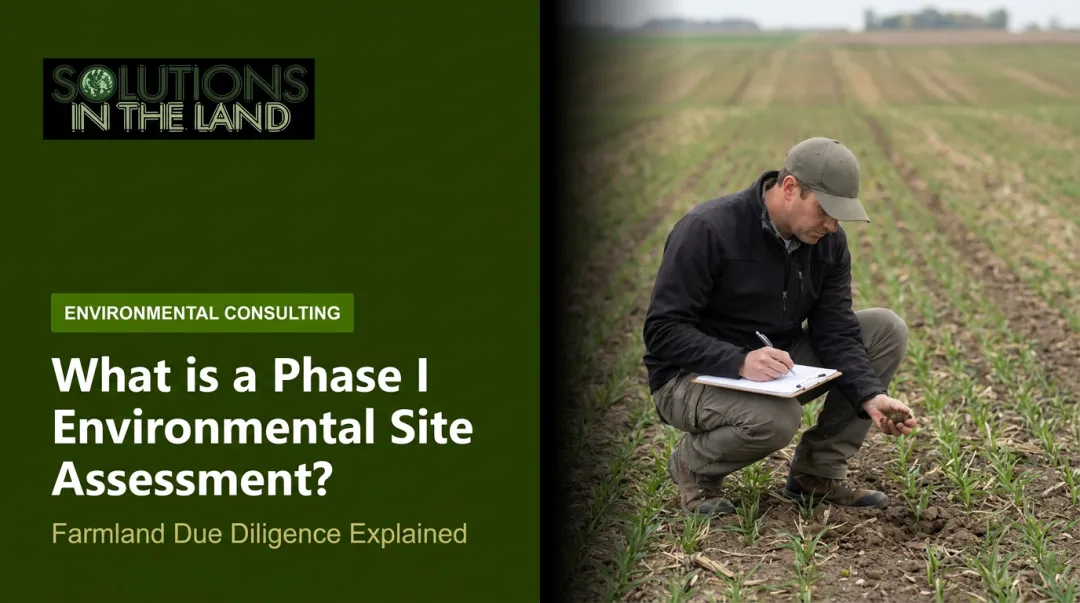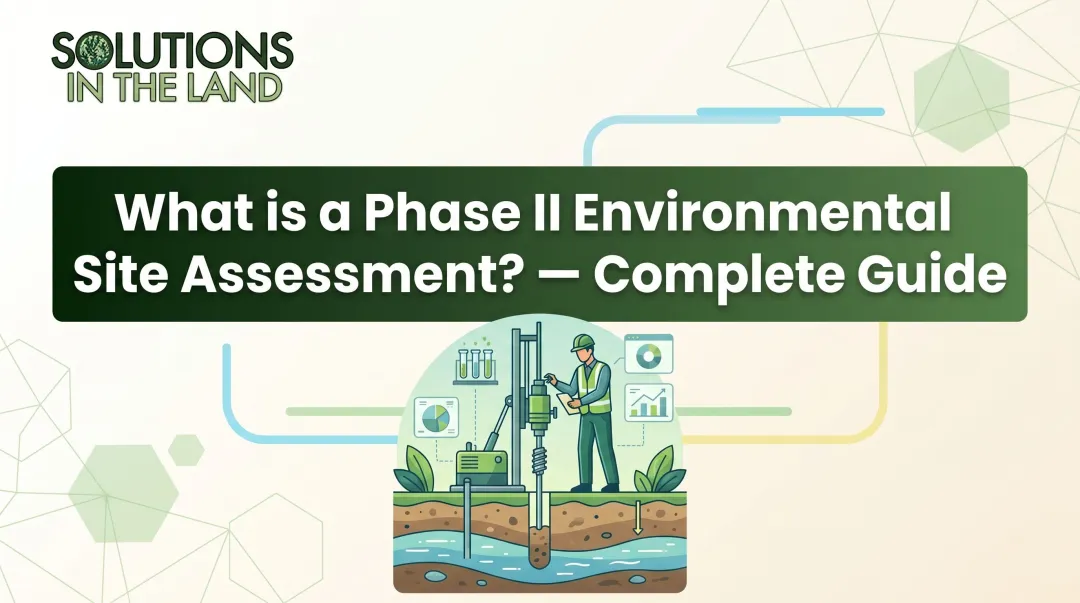

Understanding the difference between a Phase I and a Phase II Environmental Site Assessment (ESA) is the key to managing this uncertainty. While both are essential due diligence tools, they answer very different questions. A Phase I ESA is a research-based process that evaluates the likelihood of contamination, while a Phase II ESA is an invasive investigation that physically tests for it. This article breaks down what each assessment involves, when you need them, and how to use their findings to make smarter property decisions.
Key Takeaways
- A Phase I ESA is a non-invasive assessment that identifies potential environmental risks, known as Recognized Environmental Conditions (RECs), by reviewing records, history, and site observations.
- A Phase II ESA is a targeted, invasive investigation that collects and analyzes samples (soil, groundwater, etc.) to confirm or deny the presence of suspected contamination.
- A Phase I does not automatically lead to a Phase II; the need for testing depends on the findings, property history, lender rules, and your specific goals.
- Costs and timelines for both assessments vary widely based on property size, complexity, site history, and the specific testing required.
- ESAs are distinct from other reviews like wetland studies, asbestos surveys, or mold inspections, which may also be necessary for comprehensive due diligence.
Phase I vs. Phase II Environmental Site Assessments: Quick Comparison
The simplest way to understand the two assessments is to see them side-by-side. A Phase I is like a background check on the property, while a Phase II is the follow-up investigation when that background check raises red flags.
| Aspect | Phase I Environmental Site Assessment | Phase II Environmental Site Assessment |
|---|---|---|
| Purpose | To identify potential or likely environmental contamination, known as Recognized Environmental Conditions (RECs). | To confirm if suspected contamination is actually present, and if so, determine its concentration and extent. |
| Methodology | Records research, historical document review, regulatory database searches, site reconnaissance, and interviews. | A planned sampling and analysis program, fieldwork, accredited laboratory testing, and data interpretation. |
| Physical Intrusion | Non-invasive. The process is primarily observational and research-based, with no routine soil or water sampling. | Potentially invasive. May involve drilling, soil borings, installing monitoring wells, and collecting physical samples. |
| Typical Outcome | A report stating whether RECs were identified. It may recommend no further action or advise that a Phase II is warranted. | A report with laboratory data that can support risk evaluation, remediation planning, or transaction negotiations. |
| Cost & Timing | More predictable. Influenced by property size, location, and the availability of historical records. | Highly variable. Depends on the number and type of samples, drilling depth, contaminants tested, and lab requirements. |
What Is a Phase I Environmental Site Assessment?
A Phase I ESA is the standard first step in environmental due diligence for commercial and agricultural real estate. It identifies potential environmental liabilities before a transaction closes.
The process follows the federal standard ASTM E1527-21, which the EPA recognizes as compliant with the All Appropriate Inquiries (AAI) rule.
Meeting that standard helps buyers pursue liability protections under CERCLA. A Phase I report is not an absolute legal guarantee; it is one part of a broader due diligence defense.
Core Components of a Phase I ESA
An environmental professional conducting a Phase I ESA performs four key tasks:
- Regulatory & Database Review: Search federal, state, and local databases for spills, registered tanks, hazardous waste sites, and other regulated activities on the property and nearby parcels.
- Historical Research: Review aerial photos, fire insurance maps, city directories, and building permits for past land uses that may have caused contamination.
- Site Reconnaissance: Walk the property and surroundings for visual clues such as storage tanks, chemical drums, stained soil, stressed vegetation, floor drains, or dumped waste.
- Interviews: Interview current and past owners, operators, and occupants when possible to capture firsthand history and site practices.
Understanding the Findings
The final report classifies potential issues into specific categories, which dictate the next steps:
- Recognized Environmental Condition (REC): Presence or likely presence of hazardous substances or petroleum products from a release or material threat of release; further investigation may be needed.
- Controlled REC (CREC): Past contamination addressed, but residual material remains under engineering or institutional controls that must stay in place.
- Historical REC (HREC): Past release cleaned up to unrestricted-use standards; generally a closed issue, not a current concern.
- De Minimis Condition: Minor issue that poses no health or environmental threat and would not trigger enforcement; not a REC.
A Phase I is especially critical for properties with a history of industrial use, gas stations, dry cleaners, auto repair shops, landfills, or agricultural sites with a long history of intensive pesticide or fuel storage.

What Is a Phase II Environmental Site Assessment?
If a Phase I ESA is the background check, a Phase II ESA is the focused, evidence-based investigation. You only need one when a Phase I or other credible source identifies a specific reason to suspect contamination, most often a REC. A Phase II is not a fishing expedition; its scope is designed to answer the questions raised in the Phase I.
For example, if a Phase I identifies a former underground storage tank as a REC, the Phase II targets soil and groundwater samples near the old tank to determine whether a leak occurred.
Field Activities and Laboratory Analysis
The goal of a Phase II is to collect scientifically valid data. On-site work can include:
- Soil Borings: Drilling into the ground to collect soil samples at various depths.
- Groundwater Sampling: Installing temporary or permanent monitoring wells to collect groundwater for analysis.
- Soil Vapor Testing: Collecting subsurface air samples to check for volatile organic compounds (VOCs) that could pose an indoor air quality risk.
- Surface Water & Sediment Sampling: Testing ponds, streams, or drainage ditches if they are suspected of being impacted.
Consultants document samples with a chain-of-custody procedure and send them to an accredited laboratory. The lab analyzes the samples for the specific contaminants of concern identified in the Phase I. Results are compared to applicable federal or state screening criteria to determine their significance.
What Triggers a Phase II?
A Phase II is typically recommended for one or more of the following reasons:
- A Recognized Environmental Condition (REC) was identified in the Phase I report.
- There is physical evidence of a release, such as stained soil or chemical odors.
- The property has a history of high-risk activities (such as dry cleaning, manufacturing, or a gas station).
- Contamination is known to exist on an adjacent property, creating a risk of migration.
- A lender, investor, or regulatory agency requires physical testing as a condition of the transaction.
A real-world example from Queens, New York, shows how a Phase II can change a project. A Phase II investigation for a redevelopment site involved seven soil borings and four groundwater wells. The testing found lead and mercury in the soil and other chemicals in the groundwater above state criteria.

As a result, the consultant recommended further groundwater investigation and a soil-vapor control system in the new building's design. Physical data drove a tangible change to the development plan.
Phase I vs. Phase II: Which Do You Need?
For nearly every commercial or agricultural property transaction where the environmental history is unknown, start with a Phase I ESA.
Skipping straight to a Phase II is rarely wise. Without Phase I context, sampling can hit the wrong locations, chase the wrong contaminants, or miss a liability source entirely—and you lose the due diligence record lenders and legal protections often require.
A Practical Decision Sequence
- Commission a Phase I from a qualified environmental professional when you acquire, refinance, or redevelop a property—this is your baseline risk assessment.
- Review the conclusions with that professional. If there are no RECs and your lender agrees, environmental due diligence may be complete.
- Move to a Phase II only if the Phase I finds a REC or a significant data gap, weighing the risk, lender requirements, and your tolerance for uncertainty.
- Treat wetlands, asbestos, lead paint, and mold as separate inspections—ESAs cover hazardous substances and petroleum, not every environmental issue.
The findings from these assessments are powerful negotiating tools. They can be used to ask for a price reduction, require the seller to perform cleanup, allocate future responsibility, or ultimately decide to walk away from a deal that carries too much risk.

For agricultural landowners, fold these findings into a larger property vision. A whole-system farm plan weighs contamination risk alongside soil health, water resources, and long-term economic viability.
Understanding site conditions is foundational to sustainable crop planning and agricultural resilience. Solutions in the Land helps landowners and farmers interpret ESA results inside that broader plan so environmental risk decisions support stewardship and profitability.
Before closing or breaking ground, get a property-specific scope from a qualified environmental professional. Coordinate those findings with your lender, attorney, and land-planning advisors before you commit.
Conclusion
Phase I and Phase II Environmental Site Assessments are related but distinct tools for managing risk in land and property transactions. A Phase I identifies the potential for contamination through research and site observation. A Phase II tests a specific, identified concern with physical sampling and lab analysis so you can quantify that risk with data.
Start with a Phase I. Move to a Phase II only when findings warrant it. That sequence keeps due diligence focused, limits unnecessary cost, and supports clearer decisions about the land.
Frequently Asked Questions
How much does an environmental site assessment cost?
Phase I costs are relatively predictable and scale with property size, location, and historical complexity. Phase II costs depend on sample count and type, drilling needs, and lab analyses required.
What does an environmental site assessment include?
A Phase I includes records and historical research, a site inspection, and interviews. A Phase II follows a site-specific sampling plan to collect and analyze soil, groundwater, or soil vapor for contamination.
How long does a Phase II environmental site assessment take?
Most Phase II assessments take several weeks to a few months. Timing depends on site access, investigation complexity, driller availability, lab turnaround, and whether more sampling rounds are needed.
What is the difference between a Phase 1 and Phase 2 environmental assessment?
A Phase I evaluates the potential for contamination based on historical research and site observation, without sampling. A Phase II is a physical investigation that uses sampling and lab analysis to confirm if suspected contamination is actually present.
What triggers a Phase 2 environmental site assessment?
A Phase II is typically triggered by a Recognized Environmental Condition (REC) in a Phase I report. Other triggers include evidence of a release, high-risk past uses such as a gas station, or lender or regulator requirements.
Why do I need a Phase 1 Environmental Site Assessment?
A Phase I ESA helps you spot potential environmental liabilities before buying, refinancing, or developing property. Done under EPA's All Appropriate Inquiries rule, it also supports landowner liability protections under CERCLA.