This scenario plays out more than developers expect—and it's almost entirely preventable.
Environmental due diligence (EDD) is the structured process that identifies these risks before you commit capital to a property. Under frameworks like CERCLA, skipping it doesn't just create project delays—it can make you legally responsible for contamination you didn't cause. This guide breaks down what EDD involves, which legal protections it unlocks, and how to execute it correctly before purchasing agricultural, rural, or commercial land.
Key Takeaways
- EDD evaluates a property's environmental conditions before purchase to prevent costly post-acquisition surprises
- CERCLA holds current owners liable for contamination regardless of who caused it, making EDD your primary legal protection
- Phase I ESAs must be completed before taking title; certain components expire within 180 days
- Agricultural land carries unique risks including legacy pesticides, nitrate leaching, and lagoon runoff from prior farm operations
- Wetlands, endangered species habitat, and protected waterways can stop a development project just as surely as chemical contamination
What Is Environmental Due Diligence?
Environmental due diligence is the process of evaluating a property's environmental conditions and potential liabilities before purchase, development, or financing. It covers soil and groundwater contamination, regulated habitats, hazardous materials, regulatory compliance history, and more.
EDD isn't limited to obviously industrial sites. It applies equally to:
- Agricultural and farmland transitions
- Rural and undeveloped parcels
- Commercial and industrial acquisitions
- Any property where financing or development is planned
Developers, lenders, investors, and environmental attorneys typically require EDD before closing. Lenders won't finance properties with unresolved environmental liability, which makes EDD a practical necessity — not just a legal formality.
EDD breaks into two distinct categories:
- Traditional EDD (TEDD) — focuses on contamination, hazardous materials, and regulatory compliance history
- Natural Resource EDD (NREDD) — addresses wetlands, waterways, protected species, and cultural sites
For agricultural and rural land, both are usually relevant.
Why Land Developers Can't Afford to Skip Environmental Due Diligence
CERCLA Liability Follows the Deed, Not the Damage
The Comprehensive Environmental Response, Compensation, and Liability Act (CERCLA) imposes strict, joint and several liability on current property owners for hazardous substance releases—regardless of who caused the contamination. Buy a farm with pesticide-impacted groundwater, and you may own the cleanup obligation along with the deed.
Enforcement numbers make the stakes concrete. In FY 2025, EPA secured approximately $714.3 million in cleanup commitments from responsible parties — including Atlantic Richfield, which agreed to pay over $21 million at the Anaconda Smelter Superfund Site alone.
Three Liability Defenses EDD Unlocks
Completing EDD correctly before taking title qualifies you for three critical CERCLA defenses:
| Defense | Who It Protects | Key Requirement |
|---|---|---|
| Innocent Landowner | Buyers with no prior knowledge of contamination | AAI completed pre-acquisition; due care exercised |
| Bona Fide Prospective Purchaser (BFPP) | Buyers who knowingly acquire contaminated property | AAI completed; ongoing obligations met |
| Contiguous Property Owner (CPO) | Owners impacted by off-site contamination migration | AAI completed; contamination not caused by owner |
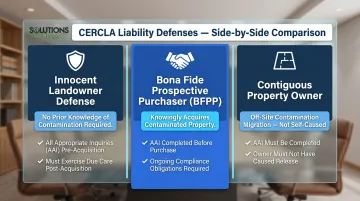
All three require All Appropriate Inquiries (AAI)—codified at 40 CFR Part 312—to be completed before acquiring title. Miss that window, and none of these defenses apply.
The Real Cost of Skipping EDD
Beyond CERCLA liability, skipping environmental due diligence exposes you to:
- Unexpected remediation costs that can dwarf the acquisition price
- Regulatory fines for Clean Water Act and Clean Air Act violations
- Construction delays lasting months or years during investigation and cleanup
- Property devaluation if contamination is publicly disclosed
- Civil lawsuits from neighboring landowners affected by contamination migration
In short, EDD is not an optional line item — it's the foundation of a defensible acquisition strategy.
Phase I and Phase II Environmental Site Assessments Explained
Phase I ESA: Above-Surface Investigation
A Phase I Environmental Site Assessment is a historical and above-surface investigation conducted under ASTM E1527-21, which EPA formally recognized as compliant with AAI requirements on February 13, 2023.
A Phase I ESA includes:
- Site inspection of visible conditions, structures, and surrounding land use
- Historical records review using aerial photographs, fire insurance maps, city directories, and Sanborn maps
- Regulatory database searches covering ECHO, SEMS, NPL, and state environmental databases
- Interviews with current/past owners, occupants, and local government officials
The output is a written report identifying Recognized Environmental Conditions (RECs)—defined as the presence or likely presence of hazardous substances or petroleum products under conditions indicating an existing or past release. A REC finding doesn't disqualify a property; it triggers further investigation.
Critical timing rule: The Phase I ESA must be completed within one year of property acquisition. Specific components—interviews, environmental lien searches, regulatory records review, and site reconnaissance—must be updated within 180 days of closing. This is one of the most commonly overlooked requirements developers face.
Phase II ESA: Sub-Surface Investigation
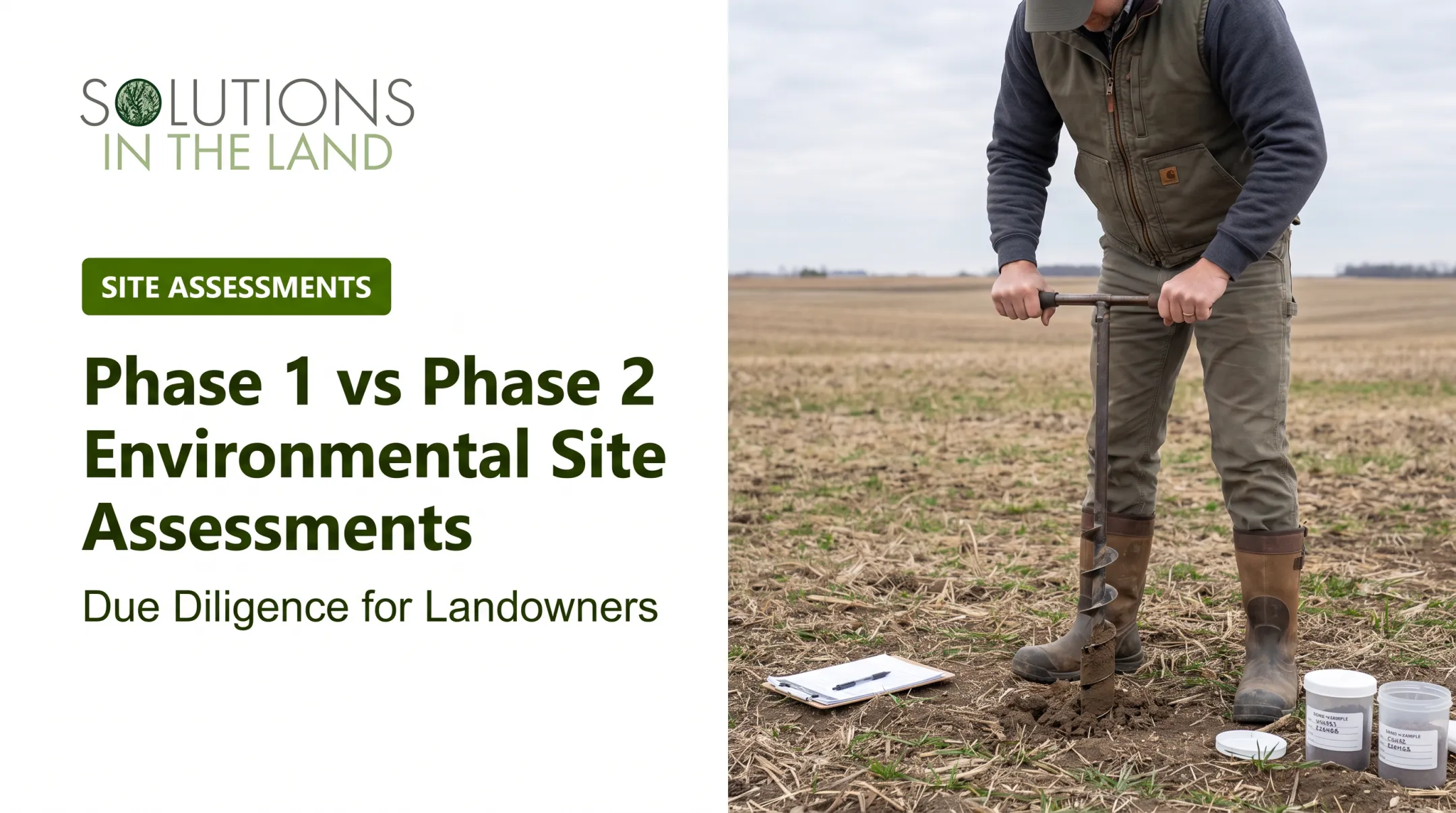
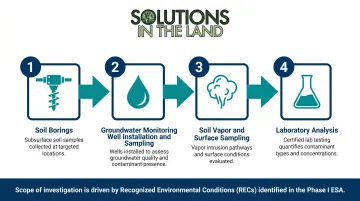
When a Phase I identifies RECs, a Phase II ESA under ASTM E1903-19 follows. This is a sub-surface investigation involving:
- Soil borings at identified areas of concern
- Groundwater monitoring well installation and sampling
- Soil vapor and surface sampling for sites with volatile contaminant concerns
- Laboratory analysis to identify contamination type, concentration, and extent
Each scope is built around the specific RECs identified, with the chemicals of concern, local geology, depth to groundwater, and site access all shaping the investigation design.
According to Fehr Graham, an environmental consulting firm, Phase II ESAs typically range from $10,000 to $30,000, with higher costs for complex sites, larger parcels, or extensive analytical suites.
Key Environmental Risks and Red Flags to Watch For
Contamination Red Flags
Prior land use is the single strongest predictor of contamination risk. Watch for:
- Former gas stations, dry cleaners, chemical storage, or light industrial operations on or near the parcel
- Visible soil staining, distressed or dead vegetation in patterns inconsistent with drainage
- Unusual odors at or near the surface
- Underground storage tanks (USTs)—even removed ones leave residual contamination risk
- Proximity to Superfund-listed sites, which can indicate groundwater plume migration
Agricultural Land-Specific Risks
Farmland carries environmental risks that developers frequently underestimate:
- DDT and other organochlorine insecticides persist in soils and sediments long after their use ended in the 1970s, per USGS — legacy pesticide residue remains a real risk on former cropland
- Nitrate leaching: Intensive fertilizer application leads to nitrate accumulation in groundwater, a documented health risk that EPA flags as a significant agricultural contamination concern
- Manure lagoon runoff: Properties formerly hosting livestock operations or CAFOs may have significant nitrogen and phosphorus loading in soils and nearby waterways
- Irrigation water quality: Poor irrigation source water can deposit contaminants into soil over time
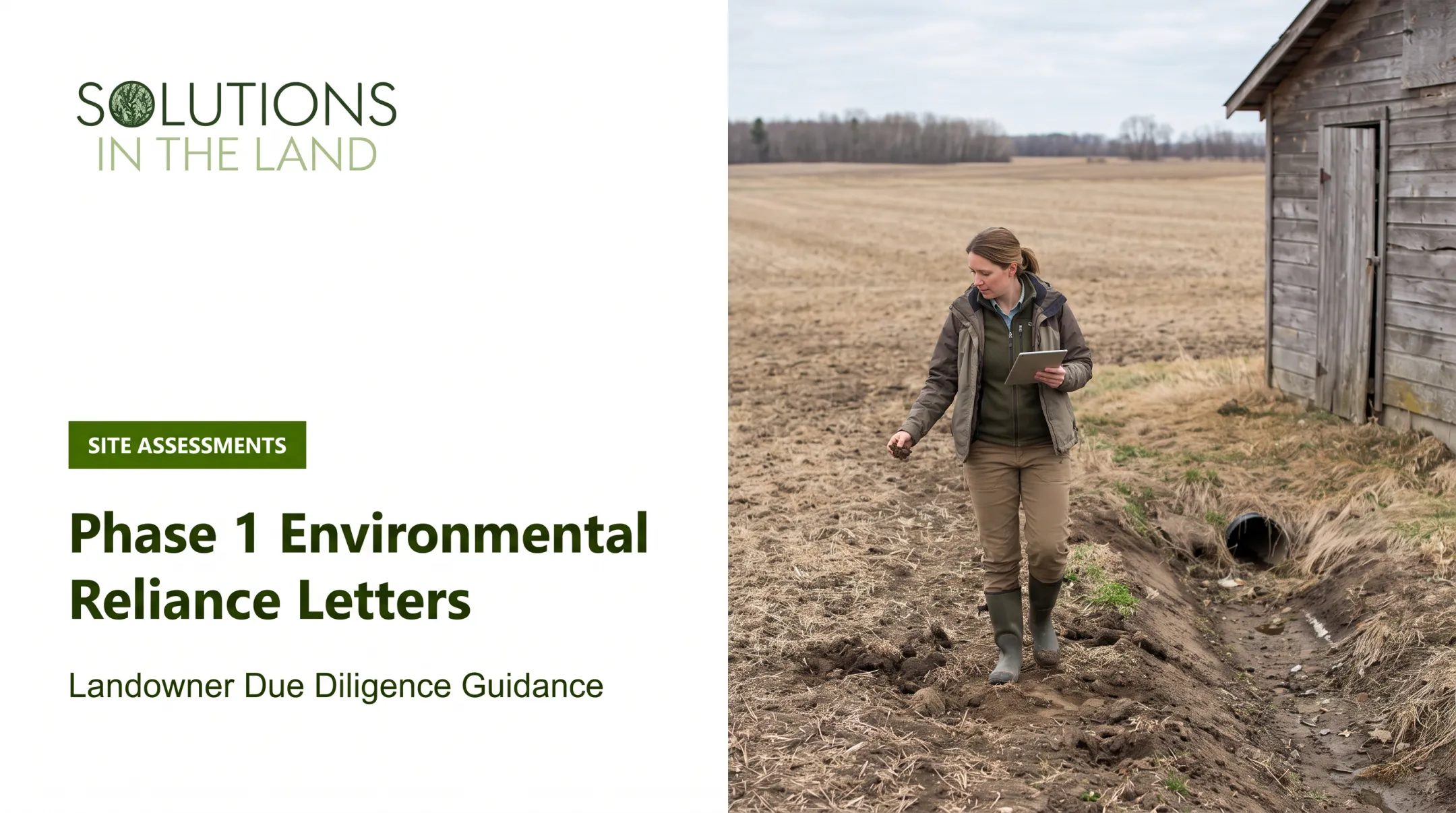
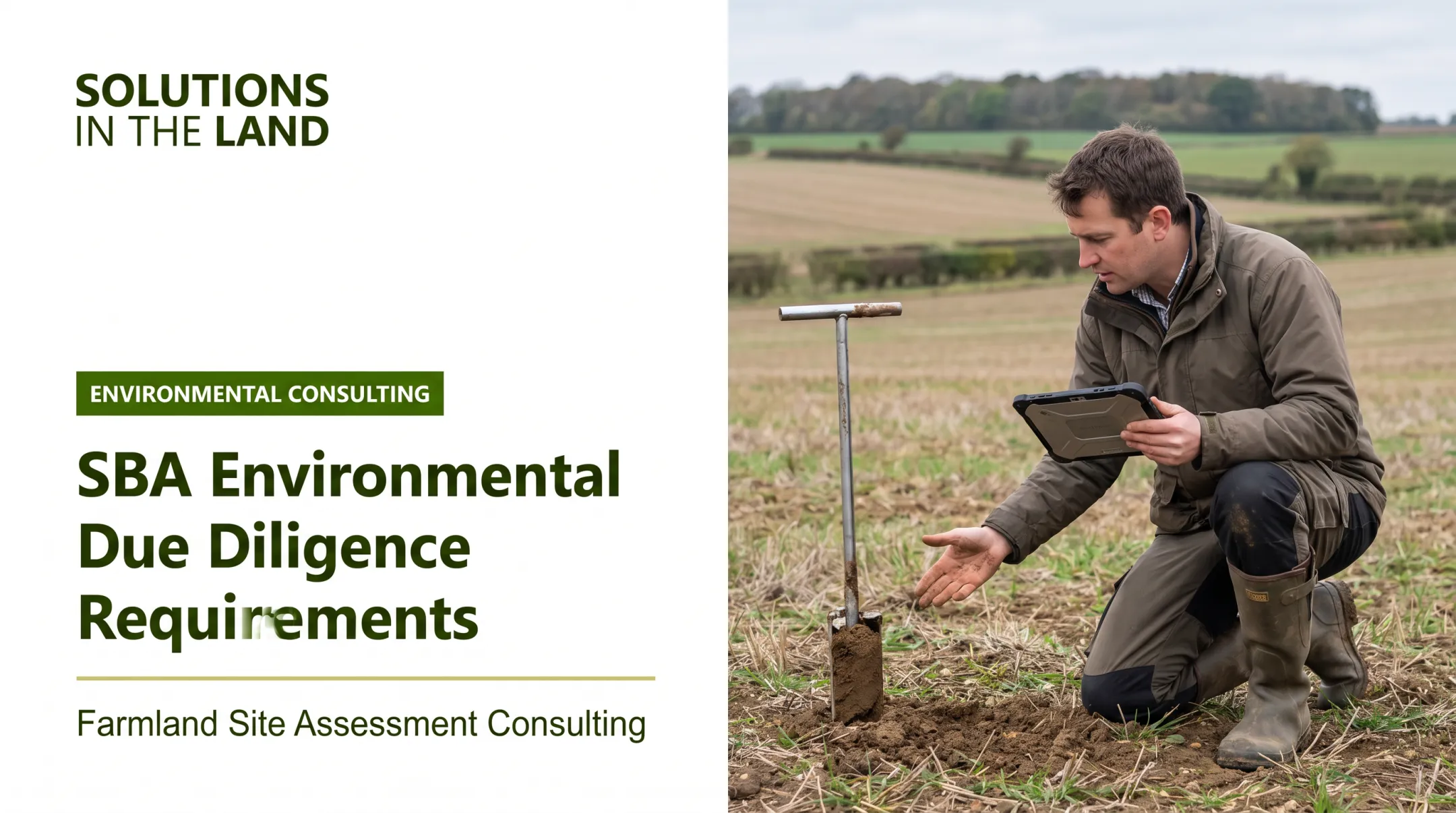
For commodity crop transitions, an agronomic consultant alongside your environmental professional adds context a standard Phase I can miss — including cropping history, prior land management, and soil conditions that shape Phase II scope. Solutions in the Land, a whole-system farm planning consultancy with experience in EPA Region 5 agricultural assessments, is one resource for that kind of integrated review.
Natural Resource Red Flags
- Presence of wetlands or hydric soils (triggers Clean Water Act Section 404 jurisdiction)
- Proximity to jurisdictional waterways under CWA Section 404, administered by the U.S. Army Corps of Engineers
- Documented habitat for threatened or endangered species—federal actions require Section 7 consultation; non-federal projects may need a Habitat Conservation Plan under Section 10
- Flood zone mapping and FEMA designation
Unauthorized discharges to regulated waters trigger civil and criminal enforcement. Wetland issues can halt a project as effectively as soil contamination.
Regulatory and Compliance Red Flags
- Prior permit violations or enforcement actions visible in EPA's ECHO database
- Existing environmental cleanup liens on the title
- Institutional controls such as deed restrictions limiting use to commercial or industrial purposes
- Properties already listed on or proposed for the National Priorities List (NPL)
How to Build Your Environmental Due Diligence Process
Assemble the Right Team Before You Start
EDD requires more than one professional:
- Environmental Professional (EP): Required under AAI to conduct and sign the Phase I ESA. Must meet qualifications under 40 CFR Part 312
- Environmental Attorney: Protects attorney-client privilege over consultant findings; negotiates consultant agreements and indemnification provisions
- Ecologist or wetland specialist: For properties with potential natural resource issues
- Agronomist or land planning consultant: For agricultural land with complex prior use history
For rural and farmland acquisitions, an agronomic expert who understands regional cropping history, soil health, and legacy farming practices can surface prior land use details that directly shape the Phase I scope. Solutions in the Land, for example, uses a structured regional context analysis and current conditions inventory as part of its farm planning work — the same kind of baseline that informs a stronger EDD process on agricultural parcels.
Conduct a Preliminary Risk Screen First
Before commissioning a full Phase I, spend a few hours on desktop review:
- Search EPA's ECHO database for enforcement history on or near the parcel
- Check SEMS (Superfund Enterprise Management System) for nearby Superfund sites
- Review aerial imagery across multiple decades using Google Earth Pro or historical USGS imagery
- Examine county records for prior land use and zoning history
- Identify obvious red flags that should expand the Phase I scope or trigger immediate Phase II planning
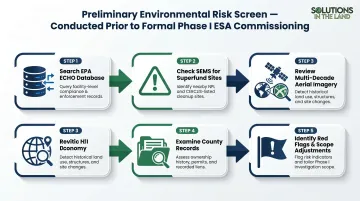
This pre-screen helps allocate investigation budget toward the highest-risk areas.
Once you know where the risks concentrate, confirming what legal restrictions already exist on the property becomes the next critical step.
Understand Existing Land Use Controls
Before purchase, confirm whether the property already carries:
- Institutional controls (ICs): Deed restrictions, groundwater use prohibitions, or land use limitations from prior remediation. These are legally binding and transfer with the property
- Engineering controls: Soil caps, vapor mitigation systems, or containment barriers that require ongoing maintenance
ICs can prohibit residential development, restrict well installation, and require ongoing monitoring access. Discovering them post-closing can fundamentally alter a project's economics.
With those constraints mapped, EDD findings stop being just a risk filter — they become active inputs to your development design.
Integrate EDD Findings Into the Development Plan
EDD findings should directly shape project design — not just determine whether to proceed:
- Contamination location can influence building footprints, parking placement, and open space siting (capping contaminants under impervious surfaces is a recognized remedy option)
- Wetland delineations inform buffer areas and may create conservation easement opportunities that reduce tax burden
- Natural resource findings can guide sustainable site layout and help identify properties eligible for federal conservation programs
- Clean EDD findings accelerate lender approval and reduce transaction risk for all parties
Frequently Asked Questions
What does environmental due diligence mean?
Environmental due diligence is the process of evaluating a property's environmental conditions and potential liabilities before purchase or development. It covers contamination history, regulatory compliance, and natural resource impacts to help buyers make informed decisions and qualify for federal liability protections.
What is the ASTM E1527-21 standard?
ASTM E1527-21 is the current industry standard for conducting Phase I Environmental Site Assessments. The EPA formally recognized it as compliant with All Appropriate Inquiries (AAI) requirements under CERCLA, effective February 13, 2023. Phase I ESAs must follow this standard to qualify for landowner liability defenses.
How much does a Phase II ESA cost?
Phase II ESA costs typically range from $10,000 to $30,000 for most sites, according to environmental consulting firm Fehr Graham. Larger parcels, complex contamination, or specialized analytical testing can push costs higher — always request a proposal scoped to the RECs your Phase I identified.
What are red flags in due diligence?
Common red flags include:
- Prior industrial or heavy agricultural use
- Evidence of underground storage tanks
- Proximity to Superfund or NPL-listed sites
- Regulatory violations in EPA's ECHO database
- Unresolved environmental liens on title
- Wetlands or habitat for threatened or endangered species
What is due diligence in environmental law?
In environmental law, due diligence refers to the All Appropriate Inquiries (AAI) process under CERCLA. Completing AAI before acquiring title can shield buyers from liability for pre-existing contamination through three defenses: Innocent Landowner, Bona Fide Prospective Purchaser (BFPP), or Contiguous Property Owner.
What are examples of environmental issues?
Common examples include soil and groundwater contamination from petroleum products or industrial chemicals, asbestos in existing structures, unauthorized encroachment on regulated wetlands, proximity to active Superfund sites, legacy pesticide residue on former agricultural land, and permit violations under the Clean Water Act or Clean Air Act.