Introduction
Farming in the United States is getting harder to sustain on conventional terms. Input costs — particularly nitrogen fertilizers, which hit record prices in 2022 — keep squeezing margins. Weather volatility is eroding the predictability that commodity crop planning depends on. And soil degradation from decades of intensive tillage is forcing farmers to spend more just to hold yields steady.
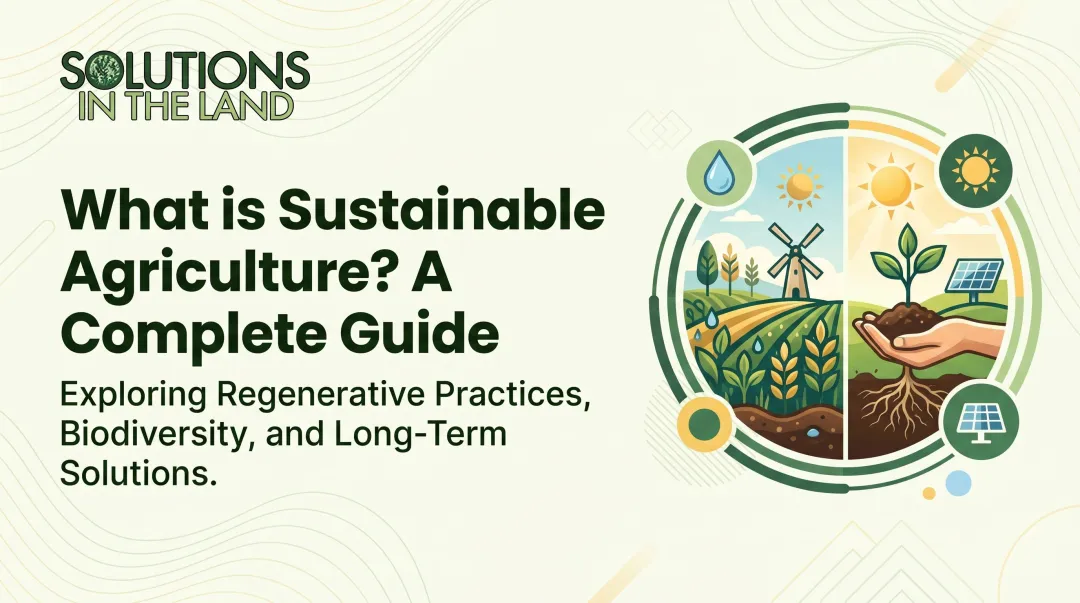
That's why agroforestry is drawing serious attention from farmers and landowners looking for systems that actually pencil out. Trees integrated into crop and livestock systems reduce input dependency, create additional income streams, and build land resilience that holds up through bad years.
This guide covers the most meaningful, measurable benefits of agroforestry: what it delivers in the field, which metrics it moves, and when it makes the most difference for landowners and farmers weighing a transition.
Key Takeaways
- Agroforestry integrates trees and shrubs into crop and livestock systems to build more profitable, resilient farms
- Core benefits: improved soil health, diversified income, and stronger climate resilience
- Tree-based systems reduce external fertilizer dependency by restoring natural soil fertility
- Multiple revenue streams buffer farms against bad harvests, price crashes, and weather events
- Early adoption pays off — benefits build steadily with consistent management over time
What Is Agroforestry?
Agroforestry is the intentional integration of trees and/or shrubs into crop and livestock systems to generate both ecological and economic benefits on the same piece of land. The USDA defines it as creating "environmental, economic, and social benefits" through this integration — a whole-system management approach, not a standalone conservation measure bolted onto conventional farming.
The USDA Forest Service National Agroforestry Center recognizes five core practices:
| Practice | Primary Application |
|---|---|
| Alley Cropping | Rows of trees with companion crops grown in the alleyways between them |
| Silvopasture | Trees integrated with grazing livestock on the same land |
| Forest Farming | High-value specialty crops (ginseng, mushrooms) grown under managed forest canopy |
| Riparian Forest Buffers | Trees and shrubs adjacent to streams and water bodies to filter runoff |
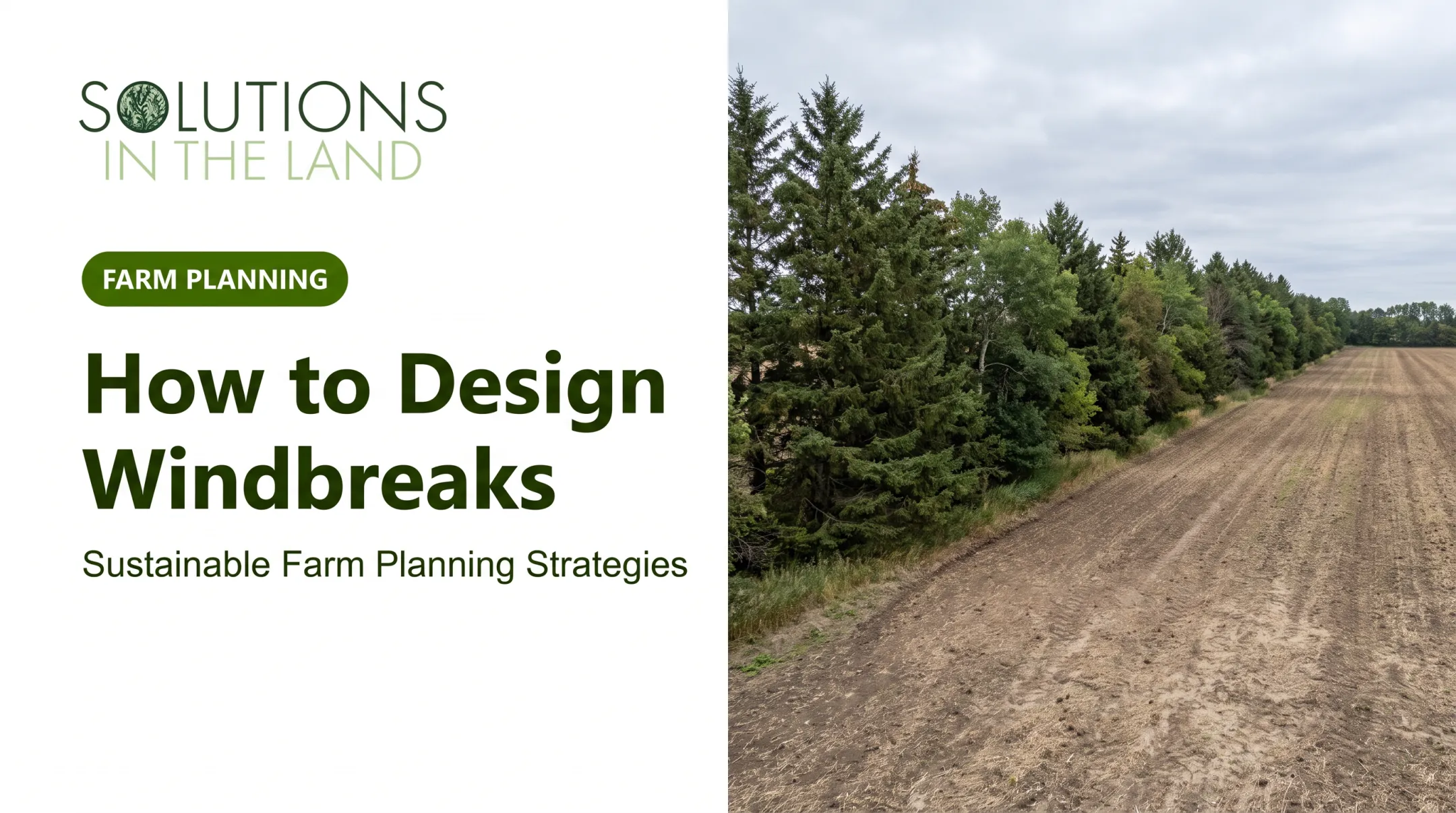
| Windbreaks | Linear tree plantings that protect crops, livestock, and soil from wind |
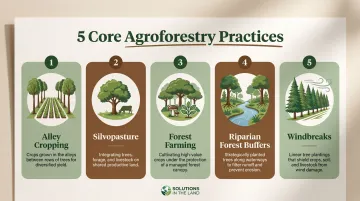
Each practice targets a different operational context — silvopasture for grazing systems, alley cropping for row crop farms, riparian buffers for land near waterways. Selecting the right fit depends on existing infrastructure, land type, and market goals.
Despite strong evidence for its benefits, only 32,717 U.S. farm operations — about 1.7% of all farms — reported agroforestry in the 2022 Census of Agriculture, a 6% increase from 2017. For farmers and landowners considering the transition, that low baseline means less market competition and greater eligibility for USDA cost-share programs designed to accelerate adoption.
Key Benefits of Agroforestry
Benefit 1: Improved Soil Health and Fertility
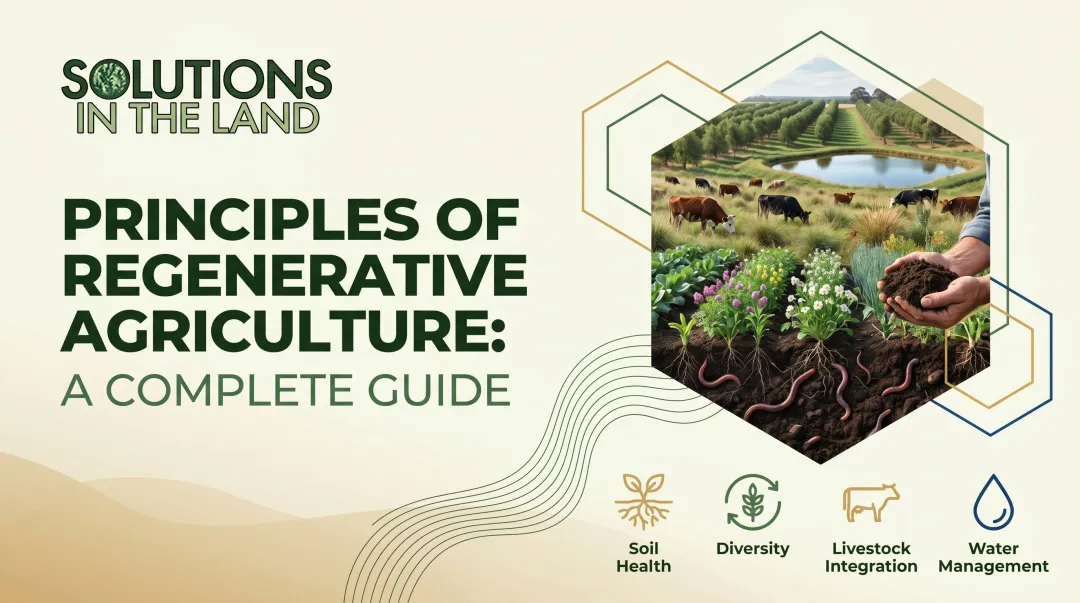
Soil degradation is a slow-moving crisis on many U.S. farms. Continuous monocultivation drives down organic matter, compacts soil layers, and depletes microbial communities that support natural fertility. Research published in PMC found that 10 years of continuous monoculture produced a marked reduction in soil microbial diversity and antagonistic bacteria — the organisms that naturally suppress disease.
Agroforestry reverses this trajectory through several mechanisms:
- Deep root systems break compacted layers and improve water infiltration
- Leaf litter and root decay add organic matter continuously
- Leguminous species fix atmospheric nitrogen, reducing synthetic fertilizer requirements
- Mycorrhizal networks expand around tree roots, feeding a more diverse soil microbiome
A 2025 peer-reviewed study found that agroforestry adoption increased soil organic carbon by 75% in smallholder maize systems, while also reducing soil bulk density by 21% — a direct indicator of improved water infiltration and root penetration. Available phosphorus increased by 80%, exchangeable potassium by 256%, and calcium doubled.
Why this matters financially: As soil fertility improves, external input costs decline. Fertilizer prices are highly volatile — natural gas alone accounts for 70–90% of variable production costs for nitrogen fertilizers, meaning energy market disruptions hit nitrogen-dependent farms hard. Farms that restore natural nitrogen cycling through agroforestry reduce their exposure to that volatility.
This benefit lands hardest on farms with degraded soils, a history of heavy tillage, or high erosion risk — and it's especially foundational for operations pursuing organic certification, where rebuilding soil biology underpins everything else. Key metrics to track: soil organic matter levels, fertilizer spend per acre, water infiltration rates, and topsoil depth retention.
Benefit 2: Economic Resilience Through Diversified Income
Single-crop dependency is one of the most significant financial vulnerabilities in American agriculture. USDA ERS research confirms that farm income is more volatile on crop farms, driven directly by the vulnerability of yields to weather and pest pressure.
Agroforestry addresses this by adding revenue streams that operate on different timelines:
- Short-term: Annual companion crops in alley cropping systems generate income while tree crops establish
- Medium-term: Fruit, nut, and specialty crops mature within 5–10 years
- Long-term: Timber and carbon sequestration create value that extends across decades
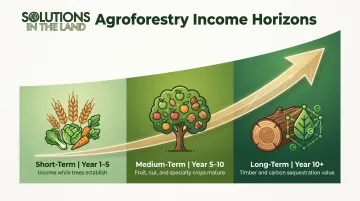
This income layering means a drought that hammers the grain crop doesn't necessarily collapse the whole farm's cash flow. Tree-based products — whether that's walnuts, timber, fodder, or specialty forest crops — can offset losses in the primary commodity.
The adopter data backs this up. A systematic review of silvopasture in the USA covering 106+ citations found that 88% of silvopasture adopters plan to continue the practice. Income diversification and livestock shade were the primary benefits cited — a continuation rate that signals real-world value, not just theoretical upside.
For farmers in volatile commodity markets or weather-uncertain regions, these layered revenue streams provide a meaningful buffer. Landowners navigating organic certification periods — when cash flow is tightest — stand to benefit most. Watch net farm income, revenue per acre, and crop loss exposure as the primary indicators of progress.
Benefit 3: Climate Resilience and Carbon Sequestration
Weather is becoming a less predictable input for U.S. farmers. Drought years, heat events, and flooding are no longer edge-case scenarios — they're recurring risks that farm planning has to account for.
Agroforestry buffers these risks through on-farm microclimate management:
- Windbreaks reduce crop damage and soil erosion from wind events
- Tree shade moderates livestock heat stress and reduces heat-related productivity losses
- Improved soil moisture retention from organic matter accumulation reduces irrigation demand during dry periods
- Canopy cover reduces the impact of heavy rainfall on bare soil
The crop protection numbers are measurable. Apple orchards using windbreaks showed a 20–30% increase in fruit set due to improved pollination conditions, according to USDA Forest Service research. These aren't marginal gains.
The same trees that buffer weather risk also accumulate carbon — a byproduct that generates tangible financial returns. Temperate silvoarable agroforestry in Switzerland stored between 0.4 and 2.5 t CO2eq per hectare per year over a 10-year monitoring period. Actual sequestration depends on species, management, and local conditions, but the range is credible for planning purposes.
That sequestration opens access to additional revenue through voluntary carbon markets (current prices range from approximately $4–$15 per ton of CO2e) and USDA conservation cost-share programs including EQIP and CSP. Both provide financial and technical assistance for recognized agroforestry practices — rates are state-specific, so the local NRCS office is the right starting point.
This benefit is most immediate for operations in drought-prone, flood-risk, or high-wind regions. For farms planning around long-term land viability, it's also the benefit with the longest payoff horizon — one that grows more valuable as climate conditions shift. Track irrigation water use, crop loss rates during weather events, and carbon credits generated per acre to measure progress.
Additional Benefits Worth Noting
Beyond soil, income, and climate resilience, agroforestry delivers measurable gains in three more areas:
Biodiversity and pest suppression. Hedgerows and windbreaks do more than divide fields — they actively support the insect populations farms depend on. According to USDA Forest Service data:
- Pest control services from beneficial insects extend 100 meters into adjacent crop fields
- Pesticide spray drift drops by 80–90% as foliage traps airborne particles
- Bumble bee nest densities run twice as high in linear woody habitats vs. open grassland
- Windbreaks can increase overwintered honey bee hive populations by up to 52%
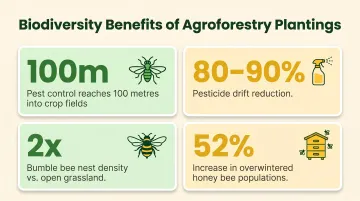
Pollinator services contribute an estimated $15 billion annually to the U.S. economy. Protecting those populations has a direct dollar value for every farm nearby.
Water quality and erosion control. Properly designed riparian forest buffers can remove up to 97% of sediment from agricultural runoff and reduce nitrogen by 40–100%. For farms near waterways, this matters both for watershed health and for regulatory compliance. Erosion costs U.S. farmers an average of $85.44 per acre in direct on-farm losses — riparian buffers are, in part, cost-avoidance infrastructure.
Livestock welfare in silvopasture. Shade from integrated trees reduces heat stress in grazing animals, with research showing improvements in grazing activity and daily weight gain when cattle have consistent shade access. Silvopasture design requires careful attention to stocking rates and rotation — forage availability and management intensity shape results considerably.
What Happens When Agroforestry Is Skipped
Staying in a monoculture system is an active choice with measurable consequences. The longer agroforestry integration is deferred, the more those consequences accumulate.
Here's what farms continue to absorb without tree integration:
- Declining soil fertility — Organic matter drops, synthetic fertilizer demand rises to compensate, and microbial diversity collapses. Each year without organic inputs makes the next season more input-intensive and more expensive.
- Ongoing erosion costs — At a national average of $85.44 per acre borne directly by farmers, erosion is an annual P&L item, not a slow background problem. Topsoil takes decades to rebuild once lost.
- Unhedged income risk — A single revenue stream absorbs the full impact of commodity price swings, poor harvests, and supply chain disruptions. No tree crops, no diversified output, no buffer. When the crop fails, the year fails.
The timing dimension matters most. Trees require years to mature, so every season of delay is a season of foregone soil improvement, carbon accumulation, and income diversification. Agroforestry returns grow over time — which means the cost of waiting isn't just a missed year. It's a shorter runway to reach the same destination.
How to Get the Most Value from Agroforestry
Agroforestry works best when it's designed as a whole-system plan from the start — not a generic planting event dropped onto an existing operation.
Four practices consistently separate agroforestry systems that deliver on their potential from those that underperform:
- Match species and layout to the actual farm. Species selection, spacing, and sequencing need to reflect the farm's soils, climate zone, existing operations, and market access. A windbreak species that thrives in Wisconsin may underperform in the Texas Panhandle. Generic templates underdeliver on every metric that matters.
- Monitor outcomes annually. Tracking soil organic matter, yield trends, input costs, and income diversification lets farmers verify returns and course-correct where needed. Agroforestry systems produce measurable data — use it.
- Commit to consistent management. Tree health, livestock rotation in silvopasture, riparian buffer maintenance, and market relationships all require ongoing attention. These systems reach their ecological and economic potential through active management, not passive installation.
Working with a consultant who understands site-specific conditions makes a measurable difference. Solutions in the Land, for example, examines each farm's history, current conditions, constraints, and revenue potential before making any recommendations. Their process works through 143 questions per farm, so species selection, layouts, and integration strategies reflect real land conditions and market opportunities — not generic best practices.
Frequently Asked Questions
Is agroforestry effective?
Yes — agroforestry is backed by extensive peer-reviewed research showing measurable improvements in soil health, income diversification, and climate resilience. Long-term USDA trials show benefits intensify over 10–20 years as tree-crop systems mature and root networks develop.
Is agroforestry suitable for small farms?
Agroforestry scales well to small operations. Practices like alley cropping, forest farming, and silvopasture can be implemented on a few acres, and high-value specialty crops under forest canopy generate strong per-acre returns that suit smaller footprints well.
How can agroforestry improve crop yields?
Trees reduce wind and heat stress, fix nitrogen through leguminous species, and enhance soil biology — all driving more consistent yields. Apple orchards with windbreaks, for example, have shown 20–30% increases in fruit set.
How does agroforestry improve soil quality?
Tree roots break compacted layers, improve water infiltration, and feed continuous organic matter through leaf litter and root decay. Mycorrhizal networks expand alongside, rebuilding the microbial diversity and structural integrity that intensive tillage erodes.
How does agroforestry reduce erosion?
Tree and shrub roots anchor soil along slopes while canopy cover absorbs rainfall impact before it dislodges topsoil. Riparian buffers intercept runoff before it reaches streams — well-designed systems remove up to 97% of sediment.
What are the main practices of agroforestry?
The five USDA-recognized practices are alley cropping, silvopasture, forest farming, riparian forest buffers, and windbreaks. Each serves a different operational purpose — the right practice depends on the farm type, land characteristics, and production goals.