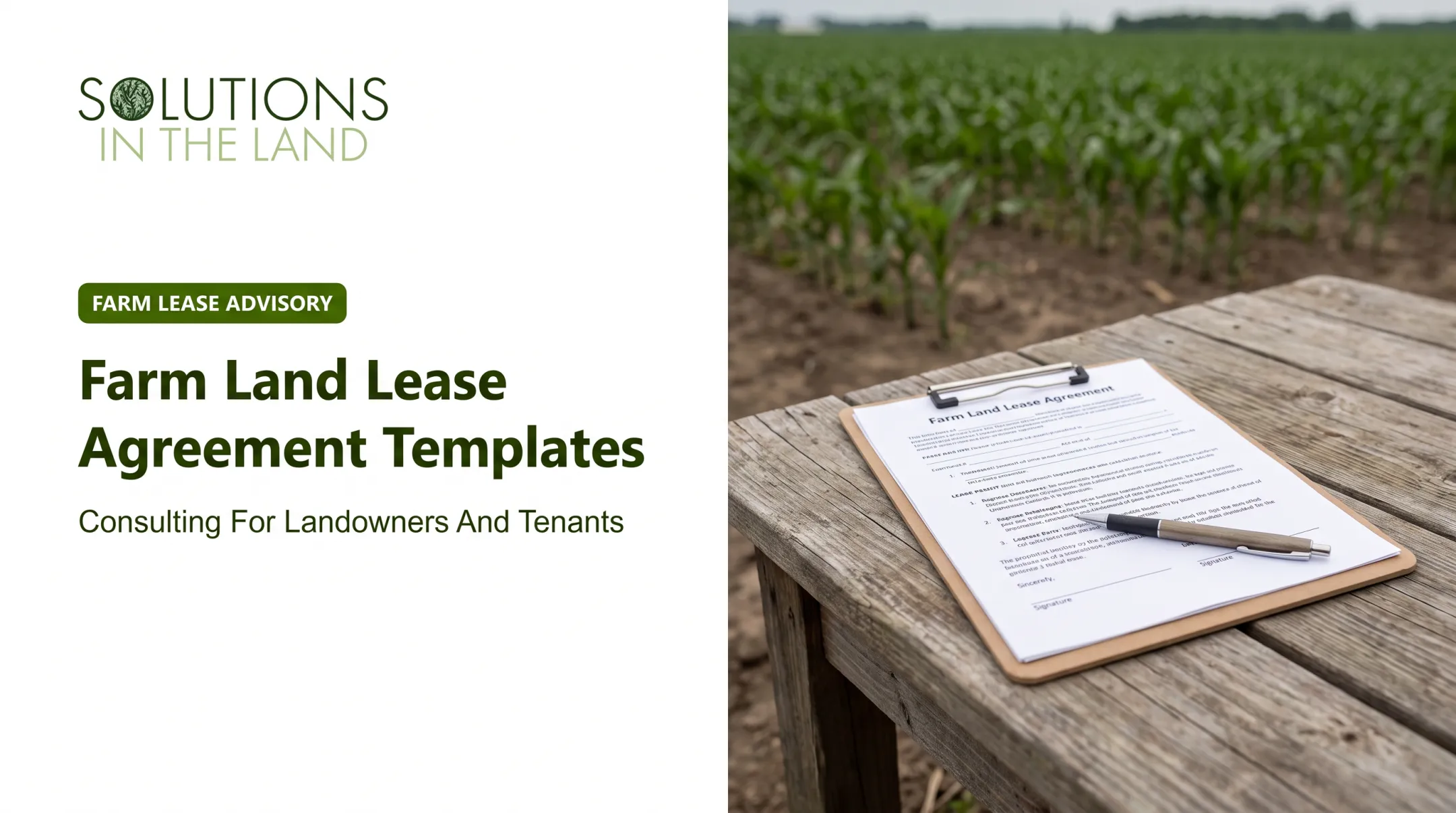

Many landowners and tenants still operate on handshake deals or leases that haven't been updated in a decade. That works fine until a drought wipes out a crop, a soil test reveals depletion, or one party wants out early. A written lease clarifies control, payment, stewardship, maintenance, investment, risk, and how disagreements get resolved — before those disagreements happen.
This guide covers the main lease types, how to price and negotiate a lease, the clauses every agreement needs, and how termination works across different states.
Key Takeaways
- Put everything in writing: parties, property, term, payment, responsibilities, and termination.
- Match lease type to risk: fixed cash, flexible cash, crop-share, and custom farming split income and risk differently.
- Value land on productivity, not acreage: soils, water, infrastructure, and conservation duties set fair rent.
- Spell out stewardship expectations: soil health, cover crops, and organic transition terms must be explicit.
- Get professional review: have an attorney and tax advisor check state-specific rules before signing.
What Are Agricultural Leases and Agricultural Tenancies?
An agricultural lease is an agreement between a landowner (or landlord) and a tenant (or operator) that creates an agricultural tenancy: the legal right to farm, graze, or otherwise use the property for a defined period. A tenancy can cover row-crop ground, pasture, farm buildings, livestock facilities, or a mix of all three.
Every enforceable lease needs five core elements:
- Identifiable parties: the landowner and tenant, named specifically
- Identifiable property: described by legal description, maps, or field boundaries
- Right to possess or use: access for agricultural purposes on the property
- A defined term: start date, end date, or renewal mechanism
- Rent or consideration: cash, crop share, or another agreed payment
Owning vs. Leasing: A Quick Comparison
| Factor | Owning | Leasing |
|---|---|---|
| Capital required | High upfront investment | Lower barrier to entry |
| Control | Full long-term control | Limited to lease term |
| Flexibility | Harder to exit or scale | Easier to adjust acreage |
| Equity building | Builds long-term equity | No ownership stake |
| Improvement responsibility | Owner bears full cost | Often shared or negotiated |
Why a Handshake Isn't Enough
Oral agreements create uncertainty around payment dates, crop choices, repair obligations, conservation practices, and what happens to a growing crop if the lease ends mid-season. Even between family members or longtime neighbors, a written document protects both sides when memories differ or circumstances change.
Lease enforceability, notice rules, recording requirements, and landlord lien rights vary significantly from state to state. This overview is not a substitute for state-specific legal advice.
What Are the Main Types of Agricultural Leases?
Most farm leases fall into three core structures—fixed cash, flexible cash, and crop-share—each dividing income, risk, and control differently. Custom farming and specialty land-use deals sit outside those three.
Fixed Cash Lease
The tenant pays a set rent regardless of yield or commodity prices. The landowner gets predictable income; the tenant controls production decisions and absorbs the yield, price, and cost risk. It's the simplest structure administratively, but it places no conservation obligations on the tenant unless the lease specifically adds them.
Flexible Cash (Flex) Lease
Rent adjusts after harvest based on agreed measures: commodity price, yield, gross revenue per acre, or a blended formula. Iowa State University Extension's flexible farm lease guidance recommends spelling out the exact formula, data source, and timing in writing, along with any caps or floors. Key design decisions include:
- Price discovery: planting price, post-harvest price, or a blended index from USDA or CME data
- Yield verification: FSA-reported yields, crop-insurance APH records, or on-farm scale tickets
- Rent floors and bonuses: a guaranteed minimum protects the landlord's downside
Crop-Share Lease
The landowner receives a share of the harvested crop instead of cash, commonly a 50/50 split for Midwest corn and soybeans, though shares vary by region and operator capability.
Spell out in writing how the parties will handle:
- Crop ownership and marketing authority
- Storage, drying, and trucking
- Division of input costs (seed, chemicals, fertilizer)
Custom Farming and Other Arrangements
Under a custom farming agreement, the landowner pays an operator a per-acre rate but keeps the crop and crop revenue, essentially hiring labor and equipment rather than leasing the ground.
Other land-use deals need their own terms, not a generic farm-lease template:
- Livestock and pasture leases
- Building or facility leases
- Hunting and recreational leases
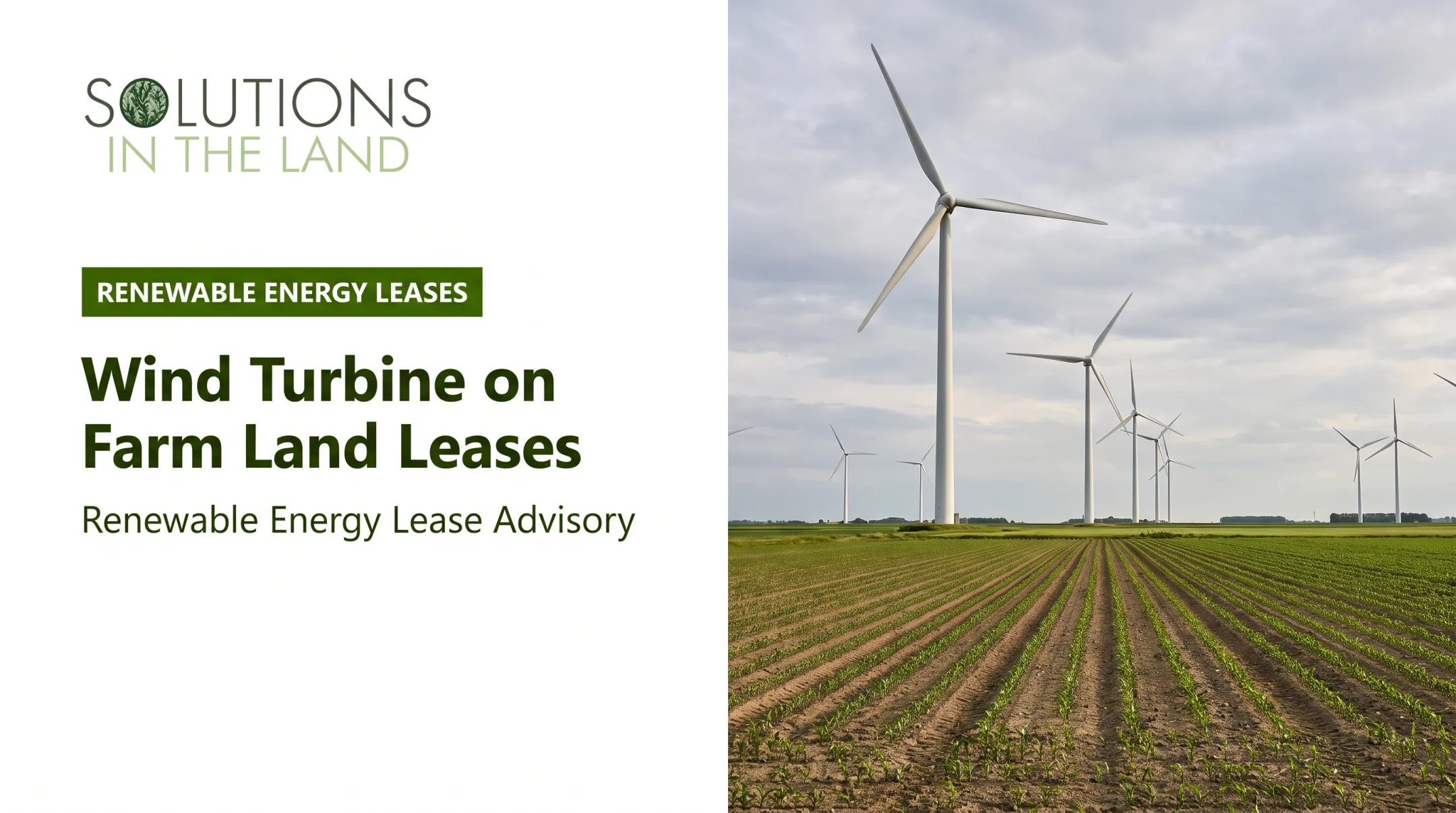
- Solar or wind energy leases
Fixed cash minimizes landowner recordkeeping but shifts all risk to the tenant. Flex and crop-share leases share risk but require more detailed accounting. Check current Extension or USDA resources for regional rental practices; local custom should inform the lease, not replace it in writing.

How to Evaluate and Negotiate a Farm Lease
Before discussing a rent figure, both parties need a clear picture of what's actually being leased.
Start With Due Diligence
Walk the property and verify:
- Boundaries, acreage, and soil capability
- Drainage, topography, and irrigation access
- Road access, buildings, fencing, and utilities
- Easements, zoning restrictions, and conservation obligations
- Any existing liens or encumbrances
Price Rent Using Real Data, Not Guesswork
USDA's National Agricultural Statistics Service reported U.S. cropland cash rent averaging $161 per acre in 2025, with pasture at $15.50 per acre — but state and regional figures vary widely. National averages shouldn't set a specific parcel's price.
Compare county-level NASS data, current Extension surveys, and the tenant's actual business economics: crop plans, input costs, labor, equipment, and market access.
Landowner and Farmer Priorities Often Differ
Landowners typically want:
- Reliable, on-time payment
- Property protection and appropriate land use
- Insurance coverage and regulatory compliance
- Preservation of soil quality and infrastructure
Farmers typically want:
- Predictable, sufficient lease duration
- Renewal rights and workable payment timing
- Permission to make improvements
- Terms that support soil-health or organic transition investment
Negotiate contingencies up front. Weather events, crop failure, prevented planting, market disruption, and regulatory changes need defined evidence and notice requirements in the lease—not informal side agreements after the fact.
Getting diligence, rent, priorities, and contingencies to line up is the hard part. Solutions in the Land works with landowners and farmers to align lease economics, market-based production plans, and conservation goals before terms are finalized. Rent structure, cropping plan, and land-health objectives then reinforce each other.

What to Include in an Agricultural Lease Agreement
Incomplete farm leases leave rent, land use, conservation duties, and exit terms open to dispute. A complete agreement should cover the following at minimum:
Parties and Property
- Legal names, property descriptions, maps, field IDs, and acreage
- Included buildings, equipment, water rights, and excluded areas
Term and Use
- Start/end dates, renewal process, and permitted agricultural uses
- Subleasing rules, entry rights, and hunting or recreational access
Payment Mechanics
- Rent amount or sharing formula, due dates, and accepted payment methods
- Late-payment consequences and grace periods
- Price-discovery dates for flex leases (planting, post-harvest, or blended USDA/CME index)
- Treatment of taxes and government-program payments
Operating Responsibilities
- Seed, fertilizer, chemicals, livestock, and utility costs
- Fences, roads, drainage, irrigation, buildings, and repairs
- Ownership of fixtures when the lease ends
Conservation and Production Standards
- Tillage restrictions (no-till, strip-till, reduced-till) with documentation
- Cover-crop species, planting windows, and termination windows
- Manure application setbacks, rate limits, and seasonal restrictions
- Soil-test cadence and nutrient management plan compliance with NRCS or state extension standards
Risk Allocation
- Liability, property, crop, and equipment insurance
- Indemnification and environmental incident responsibility
Dispute Resolution and Termination
- Default, cure period, and early-termination provisions
- Harvest access for growing crops, equipment removal, and restoration obligations
Long terms, conservation easements, major improvements, livestock operations, and water rights need state-specific customization and attorney review before signing. Solutions in the Land can help landowners and tenants structure rent, use, and conservation terms before counsel finalizes the agreement.
Managing Risk and Ending an Agricultural Lease
Clear records and early action limit damage when a farm lease hits trouble or reaches its end. The same habits that prevent disputes also make termination cleaner for both landowner and tenant.
Keep the Paper Trail
Keep signed copies of the lease and amendments, plus payment records, production records, and notes on property condition. Communicate regularly, and get approvals for repairs or new practices in writing — not just a phone call.
Watch for Warning Signs
Spot these issues early, before they harden into breach claims or a forced exit:
- Missed or late payments
- Unauthorized land uses
- Neglected maintenance or visible soil degradation
- Inadequate insurance coverage
- Activities inconsistent with the lease terms
Termination Rules Vary by State
Leases end through expiration, agreed nonrenewal, an early-termination clause, uncured breach, or nonpayment. Notice requirements still differ sharply by state and tenancy type:
- Iowa generally requires written notice by September 1 to prevent automatic continuation into the next crop year (with a March 1 termination date)
- Illinois requires written notice at least four months before the end of the year of letting
- Ohio requires landlord notice by September 1 for covered crop-growing leases lacking their own termination terms
Verify the notice method, deadline, and delivery proof for your state before you act.
Don't Overlook These at Termination
Work through these items during the exit so neither party is left exposed:
- Growing crops and stored inputs
- Livestock and manure ownership
- Fixtures and equipment removal
- Conservation payments and insurance claims
- Field restoration and final accounting
Mediation can resolve many disagreements without litigation. Statutory deadlines, liens, and eviction procedures still require advice from a qualified attorney in the relevant state.

Frequently Asked Questions
How much does it cost to rent 1 acre of agricultural land?
Rent varies by location, soil quality, crop or livestock use, irrigation, and market conditions. Check current county or regional NASS and Extension data, and factor in your specific parcel rather than relying on a national average.
How do I lease my agricultural land?
Start with property due diligence, screen and select a tenant, choose a lease structure, and negotiate responsibilities. Document everything in writing and get legal and insurance guidance before signing.
How can I terminate an agricultural lease?
The lease termination clause governs exit terms when enforceable, but state law often sets notice periods, nonpayment procedures, and possession rights. Document your notice carefully and consult an attorney familiar with your state.
What are the main types of agricultural leases?
The main types are fixed cash, flexible cash, crop-share, and custom farming or hybrid arrangements. Each divides risk, income, control, and expenses differently between landowner and tenant.
How much profit can 1 acre of agricultural land generate?
Profit depends on the enterprise, yields, prices, input and labor costs, and rent paid. Gross revenue and net profit are not the same — build an enterprise-specific budget rather than assuming a fixed return per acre.
Is income from agricultural leases taxable?
Yes, but treatment depends on the lease structure and whether the landowner materially participates. IRS Publication 225 distinguishes passive rental income from farm income tied to material participation — consult a tax professional for your specific situation.