Phase I ESA
A records review, site reconnaissance, and historical analysis designed to identify recognized environmental concerns before purchase, financing, or redevelopment of a Montana property.

Get clear, decision-ready environmental due diligence for Montana properties with assessments tailored to land transactions, redevelopment, and risk management. From rural parcels to commercial sites, Solutions in the Land helps identify recognized environmental concerns, support compliance needs, and give buyers, lenders, and landowners the confidence to move forward with fewer surprises.
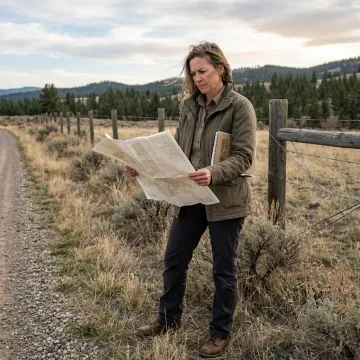
Targeted environmental due diligence services for property transactions, land planning, and site risk evaluation.
A records review, site reconnaissance, and historical analysis designed to identify recognized environmental concerns before purchase, financing, or redevelopment of a Montana property.
Focused subsurface or material testing performed when Phase I findings warrant additional investigation, helping clarify contamination risks and support informed next steps.
Environmental site reviews that help landowners and stakeholders understand current site conditions, regulatory considerations, and practical opportunities for responsible land use.
Environmental site assessments help uncover potential liabilities before they become costly surprises. Solutions in the Land provides site-specific evaluation and practical guidance for buyers, landowners, and project stakeholders navigating Montana's mix of agricultural land, redevelopment sites, and rural properties. Our approach supports clearer decisions, stronger documentation, and a more confident path through acquisition, financing, or planning.
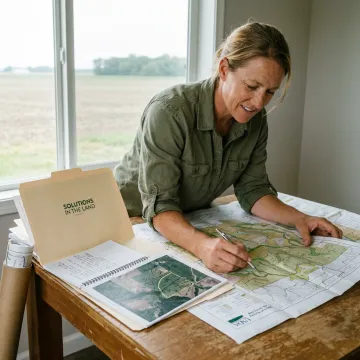
Clients rely on our team for practical, site-focused environmental insight.
Every assessment is tailored to the property's history, use, and Montana land context.
We translate findings into clear next-step guidance for buyers, lenders, and landowners.
Our work balances risk evaluation with responsible land use and environmental stewardship.
We coordinate thoughtfully with stakeholders involved in planning, transactions, and compliance decisions.
Experienced advisors supporting thoughtful land and site decisions.

Managing Partner & Agronomist
Ron Doetch is a Managing Partner and Agronomist at Solutions in the Land, a regenerative agriculture consulting firm headquartered in Kenosha, WI. With an entire career dedicated to food systems, Ron has developed deep expertise in organic, sustainable, and restorative agriculture practices. As a co-founder of the company, he collaborated with landscape architect Jim Patchett to integrate urban and rural agricultural designs that address food access, food waste, and environmental stewardship. Ron leads whole-system farm planning initiatives and organic transition consulting, helping landowners and farmers achieve both economic resilience and ecological sustainability. His site-specific, market-driven approach ensures measurable outcomes for every client he serves.
Grazing & Soil Consultant
Allen Williams serves as a Grazing and Soil Consultant at Solutions in the Land, bringing a uniquely personal perspective to regenerative agriculture as a sixth-generation farmer. His extensive hands-on experience has made him a recognized expert in soil health, adaptive multi-paddock grazing, and pasture-based meat production. Allen works closely with landowners and farmers to design grazing systems that restore soil vitality, improve watershed health, and increase farm profitability. His deep-rooted connection to the land and commitment to measurable, science-based outcomes make him an invaluable resource for clients seeking to transition toward more sustainable and profitable farming systems across the United States.
Project Coordinator
Chloe Powers serves as Project Coordinator at Solutions in the Land, playing a vital role in ensuring the smooth execution of the company's regenerative agriculture and farm planning projects. Based out of Kenosha, WI, Chloe works closely with the consulting team to coordinate client engagements, manage project timelines, and support the delivery of whole-system farm plans and organic transition programs. Her organizational expertise and dedication to client service help bridge the gap between strategic planning and on-the-ground implementation. Chloe's commitment to Solutions in the Land's mission of creating sustainable food and farming systems ensures that every project runs efficiently and that clients receive attentive, professional support throughout their journey.
Local Foods Program Director
Cheri Doetch is the Local Foods Program Director at Solutions in the Land, where she leads initiatives focused on strengthening local and regional food systems. Based in Kenosha, WI, Cheri oversees programs that connect farmers, landowners, and community stakeholders with market-based opportunities that promote sustainable food production and distribution. Her work supports the company's core mission of addressing the most significant challenges facing food and farming systems today. Cheri's dedication to building community-centered agricultural networks aligns with Solutions in the Land's partnerships with organizations such as the Fondy Food Center and the Mequon Nature Preserve, ensuring that local food access remains a cornerstone of the company's broader sustainability goals.
A Phase I Environmental Site Assessment is typically performed by an environmental professional with relevant training and experience in site history review, records research, regulatory databases, and field reconnaissance. These assessments are commonly completed by environmental consultants who understand ASTM standards, recognized environmental concerns, and how to document findings clearly for buyers, lenders, and property stakeholders.
Talk with our team about your property and due diligence needs.
Supporting property owners, buyers, and stakeholders with environmental assessment services across Montana communities and project types.
Statewide Montana
Service Coverage
Rural & Commercial Sites
Project Focus
Due Diligence Guidance
Support Type
Ask about coverage for your property, parcel, or project location.

Watershed-focused organizational membership and collaboration.
Community food systems partnership involvement.
Environmental stewardship partnership connection.
Share your property details, timeline, and goals, and our team will follow up about the right assessment scope.
To help us assist you faster, please include the reason for your message so the relevant team can reach out as soon as possible.
To help us assist you faster, please include the reason for your message so the relevant team can reach out as soon as possible.